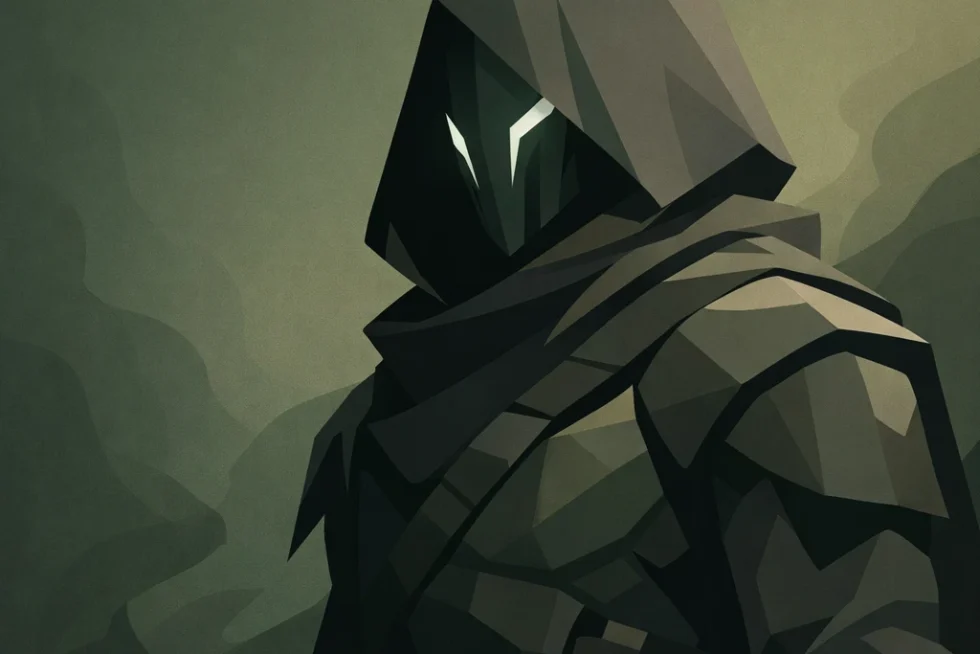
Omen in VALORANT: a quick overview
Omen is a shadow-focused figure in VALORANT whose documented identity is built around disruption rather than straightforward confrontation. He is described as hunting in the shadows and as a phantom of a memory, two ideas that also frame how his effects read in play: obscure an opponent’s ability to respond, appear elsewhere, and make the situation feel unstable.
That makes Omen a natural fit for players who value uncertainty as a tactical tool. His documented approach combines blinding enemies, teleporting across the field and causing paranoia that leaves opponents scrambling. Rather than presenting one fixed way to take a fight, those effects point toward a style based on changing what the other side can see, where they expect danger to come from, and how confidently they can act.
The available character description does not set out Omen’s current class or define a formal role for him. What it does establish is a character whose tactical identity centres on vision disruption, repositioning and pressure.
Omen’s abilities and their documented effects
Omen’s documented toolkit can be understood through three connected effects. First, he can render enemies blind. This is a direct form of vision denial: an opponent who cannot see properly has less information available at the moment they need to react.
Second, Omen can teleport across the field. Teleportation gives his playstyle a repositioning dimension, allowing the threat he represents to shift from one area to another instead of remaining tied to the place where opponents last encountered him.
Third, he can make paranoia take hold in opponents, causing them to scramble. This is the pressure element of his characterisation. The value is not just in an immediate disruption, but in forcing opponents to reconsider what is happening around them and respond under uncertainty.
The supplied material does not provide a complete current list of named abilities, identify which specific ability produces each effect, or describe an ultimate. It is therefore more accurate to treat blind, teleport and paranoia as Omen’s documented effects than as a full kit guide.
How Omen creates pressure in a match
Omen’s effects work together because each one interferes with an opponent’s decision-making in a different way. Blinding reduces vision. Teleporting changes positioning. Paranoia creates urgency and confusion. Used as a combined tactical idea, they can make an engagement feel less predictable for the opposing side.
On attack, that uncertainty can matter when a team wants defenders to hesitate before committing to a response. On defence, it can matter when attackers are trying to establish confidence about where resistance is coming from. In either case, Omen’s documented strengths are less about a static hold on one location and more about unsettling the expectations that guide a fight.
The practical point is simple: opponents are harder to read when they can see clearly, track positions and act without pressure. Omen’s effects challenge all three conditions.
Omen’s character background
Omen’s established background is deliberately sparse in the material at hand, but its tone is clear. He is characterised as a phantom of a memory and as someone who hunts in the shadows. That portrayal gives him an eerie, elusive presence rather than a detailed personal history.
The language also supports the connection between character and combat identity. A figure associated with shadows, disappearance and paranoia naturally reads as disruptive: he is not defined by announcing his presence, but by making opponents feel that they have lost control of the situation.
Beyond that impression, there is no established detail here about Omen’s origin, past identity, affiliations, relationships or chronology. His character overview is best kept focused on the phantom-like, shadow-hunting image that is directly described.
When Omen’s style fits your game plan
Omen’s style suits players who enjoy influencing a round through uncertainty. The documented effects point toward engagements where information is contested: an enemy is blinded, a position changes across the field, or paranoia makes a response less composed. This is a different appeal from a character whose value is easiest to measure through direct, visible confrontation.
His blind effect is most relevant when denying an opponent a clear read of an immediate situation. If the other side cannot see properly, their choices can become slower or more cautious. That does not guarantee an outcome, but it changes the conditions of the fight in a way that can create an opening for teammates or for Omen himself.
Teleportation adds a second layer. A player drawn to Omen should be comfortable thinking about where they might be expected to be, then recognising the value of appearing somewhere else. The important idea is not movement for its own sake. It is the pressure created when opponents can no longer rely on their last piece of positional information.
Paranoia completes that disruptive identity. When opponents scramble, they may be forced to make decisions without the calm, clear picture they would prefer. Omen’s appeal lies in creating that discomfort and taking advantage of the uncertainty it produces.
Choose Omen if you want a shadow-oriented character whose documented strengths revolve around blinding enemies, shifting position across the field and putting opponents under pressure. His style is especially appealing when you prefer to make fights harder to interpret rather than simply meeting them head-on.