How Fade’s kit creates pressure
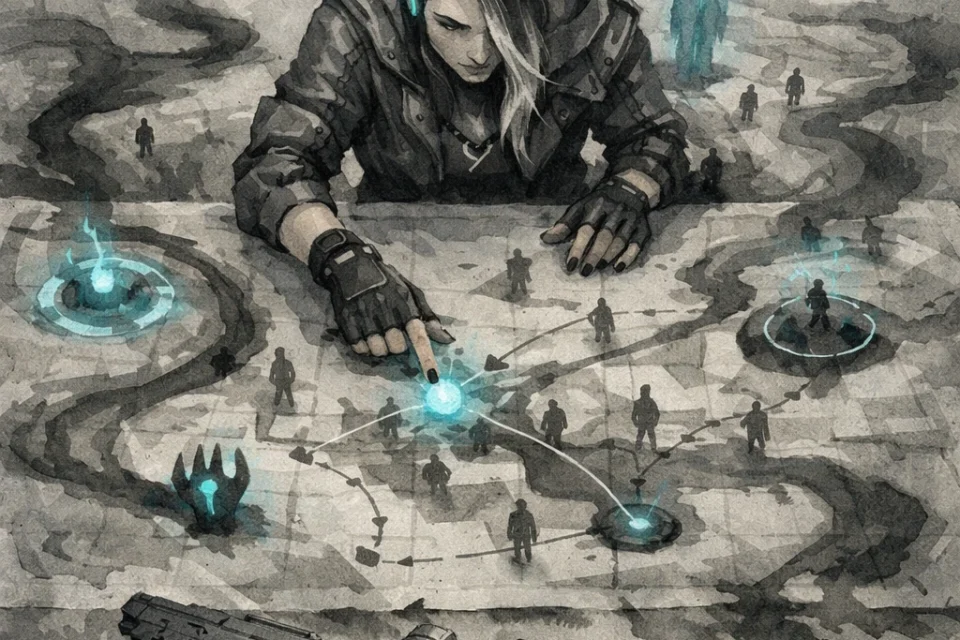
Fade is an Initiator built around turning enemy information into a fight your team can control. Her kit includes Haunt, Prowler, Seize, and the ultimate Nightfall. Rather than simply spotting an opponent and hoping someone reacts, Fade can reveal a position, send pressure along the route that enemy leaves behind, or restrict movement before a duel.
The useful mental model is simple: find opponents first, make their next move harder, then take space while they are distracted or disadvantaged. Haunt supplies the opening information. Prowler can pursue a revealed target or its trail. Seize punishes enemies caught in a small area, while Nightfall disrupts opponents on a much larger scale.
That makes Fade especially valuable when teammates are ready to act on her utility. A reveal with no follow-up is only a clue; a reveal followed by a Prowler, coordinated peek, or Seize can become an opening.
Haunt: reveal enemies and create follow-up paths
Haunt begins as an orb that Fade throws. When it lands on the ground, it creates an eye that reveals enemies. Its greatest value is not merely identifying a defender’s location through a wall, but changing how your team approaches the next few seconds of the round.
A Haunt placed near the space your team wants to challenge can tell attackers whether a defender is holding a common position, whether a site appears lightly defended, or whether a rotation may be developing. On defence, it can provide an early warning that opponents are gathering behind cover before they commit.
Revealed enemies also create trails. Those trails matter because Prowlers can latch onto them, giving Fade a direct way to convert information into pursuit pressure. If Haunt exposes someone tucked behind a corner, a Prowler can be sent toward that trail while Fade and her teammates prepare to swing behind it.
Do not treat Haunt as a guaranteed, lasting scan. Alert opponents can shoot the eye down, cutting the reveal short. Throw it where it is likely to see the area you need, but where enemies cannot remove it before your team can use the information. The goal is not always to reveal every opponent; often, revealing one key defender is enough to make the next decision clearer.
Prowler: convert a trail into a safer peek
Prowler equips a creature that Fade can initially control. This lets you guide it into nearby space rather than blindly sending it around the first corner. Once it locks onto an agent or that agent’s trail, however, Fade no longer controls it. The Prowler commits to following that target.
That commitment is what makes Prowler effective after Haunt. A trail gives the creature a route to chase, forcing the tracked opponent to deal with incoming pressure instead of holding a clean angle. When Prowler reaches an enemy, it primes for half a second and then nearsights the closest agent.
Use that nearsight window to take an aggressive peek with support. Prowler is strongest when it creates a timing advantage for a teammate, not when it is sent ahead with nobody ready to punish the affected opponent.
Seize: hold enemies in a disadvantageous fight
Seize is another thrown orb, but its purpose is control rather than scouting. When the orb hits the ground, it primes for half a second before infecting terrain in a seven-metre radius. Enemies caught in that zone are tethered to its centre, which restricts their ability to simply leave the area.
Caught enemies are also hit with 75 decay and deafen. They remain within the zone until it disappears, and the decay regenerates when the zone expires. That creates a short, valuable opportunity: an opponent is constrained, has reduced effective health, and has less access to sound information.
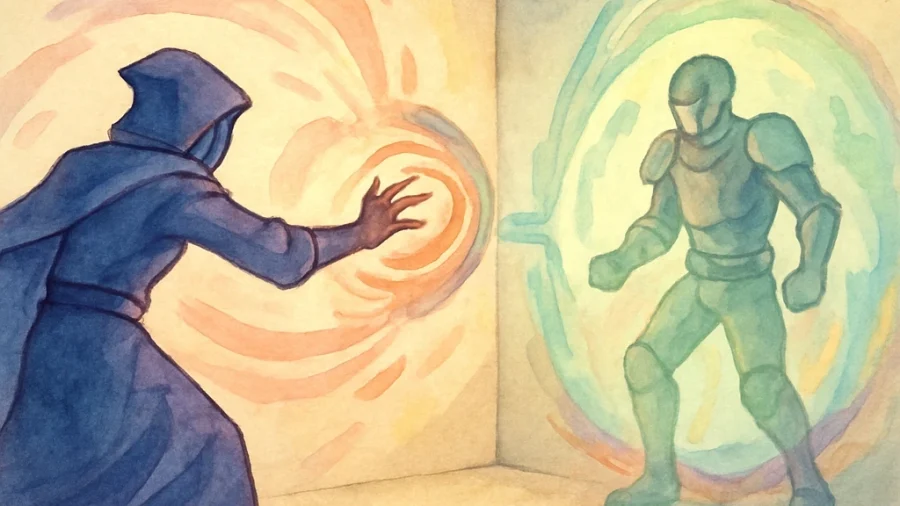
Seize works best when you already have a reason to believe an enemy occupies a particular patch of ground. Throwing it into a known corner, a contested choke, or the spot where a revealed player is likely to hold can make a weapon duel more favourable. It is less reliable as a speculative throw into a large, empty site.
Nightfall: disrupt a site or retake
Nightfall is Fade’s ultimate. When equipped and used, it fires a wave of dark mist forward. Enemies hit by the wave are trailed, deafened, and decayed for 12 seconds.
Those effects make Nightfall a powerful disruption tool for a committed site hit or retake. Affected opponents give away useful tracking information through their trails, lose sound awareness, and must fight while dealing with decay. The effect is most valuable when your team is positioned to move immediately behind it.
Think of Nightfall as a call to act, rather than a reason to wait. If teammates hesitate after the wave lands, opponents have more opportunity to reset their positions and recover control of the fight.
When to use each Fade ability
Fade’s abilities are most effective when you choose them based on the decision in front of you. The same tool can be useful on attack, defence, or a retake, but its immediate purpose should be clear before you spend it.
Use Haunt when the team needs information before committing. If your attackers are deciding whether to enter a site, Haunt can reveal defenders through walls and clarify which side of the site demands attention. That information can also help with rotations: a reveal away from the expected defence may suggest where pressure is absent, while a reveal of several opponents can warn your team not to rush into a stacked position.
On defence, Haunt is valuable before the enemy has fully entered. Revealing opponents as they gather around an approach gives your team time to call for help, reposition, or prepare utility. It can also be useful during a retake when defenders need to identify whether attackers are holding close angles or playing from deeper post-plant positions. Since enemies can shoot the eye, place it with a follow-up already in mind rather than waiting for perfect information.
Use Prowler when you want to challenge close space with less risk. A Prowler can be initially directed into a contested lane, then it takes over after locking onto an agent or trail. This makes it useful for making a defender respond before your team exposes itself. If it reaches an enemy and applies nearsight, that opponent becomes more vulnerable to an aggressive peek.
The best Prowler timing is usually just before a teammate swings, not far ahead of the team. Sending it too early can leave it isolated and allow the opponent to reset before anyone can capitalise. Sending it as your team reaches the corner gives the opponent a difficult choice: deal with the Prowler, retreat from the angle, or try to fight while nearsighted.
Use Seize when an enemy’s position is already narrowed down. Its seven-metre infected area is designed to punish players caught in a defined location. A defender hiding in a predictable pocket, an opponent trying to hold a choke, or a revealed enemy attempting to stay behind cover are all stronger Seize opportunities than an unknown target somewhere across the map.
The tether, 75 decay, and deafen effects create a clear invitation to take the duel. Do not wait until the zone has disappeared and the decay has regenerated. Communicate the throw, then have a teammate ready to pressure the restricted player. Seize can also help stop an opponent from comfortably repositioning at the exact moment your team wants to enter.
Use Nightfall when several opponents may be affected and your team can advance together. The dark-mist wave is suited to a site hit, a retake, or another high-commitment moment where disruption across multiple enemy positions matters more than isolating one close target. Trails help your side follow affected opponents, while deafen and decay make it harder for them to react cleanly.
Nightfall should support a coordinated push, not replace one. Call the direction of the attack, let the wave create disruption, and move while its effects can still shape the engagement. It is particularly useful when your team needs to break a defended setup and turn a difficult entry into several smaller, more manageable fights.
Practical Fade combinations for attack, defence, and retakes
- Attack entry: Haunt, then Prowler. Throw Haunt into the area your team intends to take. If it reveals an opponent, use the resulting trail to give Prowler a direction. Push behind the creature rather than watching it from safety; its value comes from forcing the tracked player to react while your team claims space.
- Close-corner pressure: reveal, then Seize. When Haunt identifies someone holding a confined position, Seize can turn that information into a restricted fight. The tether, decay, and deafen effects give your team a reason to challenge quickly instead of allowing the opponent to reposition freely.
- Defence or retake: Prowler before the swing. Guide Prowler into the angle your team needs to clear. If it locks onto an enemy or trail, let that pressure dictate the timing of the peek. A nearsighted opponent is easier to challenge than one holding a clean, undisturbed sightline.
- Full-team commitment: Nightfall, then advance. Use Nightfall when teammates are ready to follow the wave. Its trails, deafen, and decay effects disrupt opponents, but the advantage is strongest when your side moves into the space it creates.
Ability availability and economy
Exact ability costs, charge limits, signature recharge behaviour, and the ultimate-point requirement are not listed here because those values need to be confirmed against the current in-game ability display before you rely on them for buy-round planning.
That matters more than it may seem. Fade’s round-by-round value depends on whether you can afford to pair information with pressure: Haunt may create the trail you want Prowler to follow, while Seize can be the tool that turns a known position into a favourable duel. If the available utility changes, the best plan may change with it.
Before a match or after an update, check Fade’s loadout directly and decide which piece of utility your team needs most that round. Prioritise the tool that answers the immediate problem—information, close-space pressure, or control—rather than buying by habit.
The core Fade decision: reveal, restrict, then punish
- Reveal first: use Haunt when your team needs to know where opponents are before exposing itself.
- Follow the information: if a revealed enemy creates a trail, use Prowler to turn that route into pressure and take the resulting peek together.
- Restrict a known position: use Seize when an opponent is likely to be caught in its zone, then challenge while tether, decay, and deafen matter.
- Commit behind disruption: use Nightfall for a coordinated site take or retake, then move while affected enemies are trailed, deafened, and decayed.
- Act before the opening fades: Fade’s abilities create opportunities for teammates; they do not win the fight unless the team uses the information and pressure promptly.