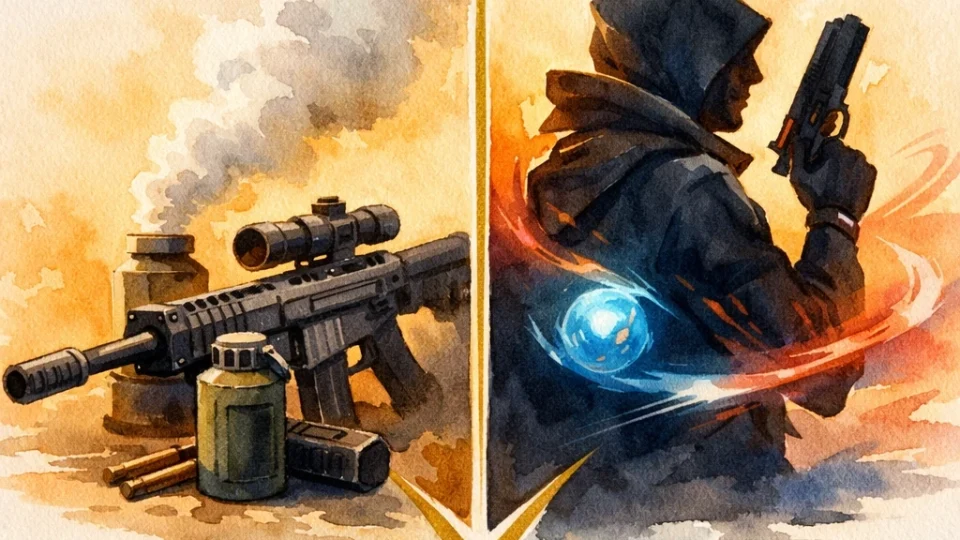
VALORANT and Counter-Strike 2 sit close together in the competitive-shooter space: both are team-based tactical FPS games built around gunplay, economic decisions and map-based play. That shared foundation is why the comparison can feel deceptively simple at first. The major separation comes from VALORANT’s agents, whose individual abilities make team line-ups and matchup-specific counterplay part of the tactical picture.
That does not make one game automatically better, more skilful or more serious than the other. Both support high-level competition and large esports audiences. The useful question is whether VALORANT’s added character-and-ability layer is a feature you want shaping your tactical decisions, or whether the common ground between the games is the part that matters most to you.
VALORANT vs Counter-Strike 2 at a Glance
At their core, VALORANT and Counter-Strike 2 are competitive tactical shooters where coordinated teams, disciplined shooting and informed decisions matter. Their gunplay, economics and general map makeup have enough in common that players familiar with one will recognise the broad appeal of the other: success is not only about reacting quickly, but also about working with teammates and making sound choices under pressure.
VALORANT is explicitly a 5v5, character-based tactical first-person shooter. It combines precise shooting with agents who have unique abilities. That agent layer is the clearest supported dividing line in this comparison. It changes the information a team brings into a match before the shooting starts, because the selected line-up can affect the options available to the group and the answers it must find against an opponent.
Counter-Strike 2 belongs in the same broad tactical-shooter conversation, particularly around shooting, economy and map-based competition. It is also part of a major team-shooter esports rivalry with VALORANT. Still, the shared genre should not obscure the difference in emphasis: VALORANT makes character selection and abilities an overt part of strategy, while the supplied comparison material identifies those agent-specific mechanics as a fundamental distinction between the two games.
So the first choice is not simply “which shooter is harder?” It is whether you want a tactical FPS experience in which agent line-ups actively shape the strategic conversation.
The Key Difference: Agents, Abilities and Team Composition
VALORANT’s agents are more than a visual identity system. Each agent has their own abilities, and those abilities create choices about how a team is assembled. A line-up is therefore part of the tactical plan: teams can consider what their own combination offers, then work out how to respond to the opposing combination.
This matters because abilities introduce a second layer of counterplay alongside gunfights. A team is not only reading opponents through positioning, timing and shooting; it is also dealing with the strategic consequences of the agents on the other side. The result is a game where coordination can include building around a selected roster of characters and identifying counters to that roster.
That is the strongest practical reason not to treat VALORANT as merely Counter-Strike 2 with a different presentation. The games may share tactical FPS DNA, but VALORANT asks players to engage with a character-based system that can influence team composition and opponent-specific planning. For some players, that creates welcome variety and more to discuss with a squad. For others, it is simply an additional strategic consideration rather than an automatic advantage.
It would be too broad to turn this into a complete comparison of every utility option or character system in both games. The important point is narrower: VALORANT’s agent abilities are a defining part of how its teams form plans and find counterplay, and that is the central gameplay distinction supported by the comparison.
Gunplay, Weapons and Economy: Where the Games Overlap
The contrast around agents is easier to understand because it sits on top of notable common ground. VALORANT and Counter-Strike 2 have similar gunplay, similar weapon design and similar economics. Neither game is best understood as a purely ability-driven shooter or as a competition where shooting skill is incidental. Gunplay remains central to the experience.
That overlap is useful for players deciding where to spend their time. If you are drawn to tactical shooting because you enjoy making deliberate equipment choices and translating those choices into disciplined team play, both games address that interest. Their economic structures are also similar enough to be part of the shared foundation rather than a clean dividing line.
The practical distinction is one of context. In VALORANT, the gunplay and economic layer operate alongside agent abilities and team-composition decisions. This does not reduce the importance of shooting; instead, it places shooting within a broader set of strategic choices tied to the selected agents. Counter-Strike 2 and VALORANT can therefore feel related in the moment-to-moment importance of weapons and economy while still asking teams to approach preparation differently.
A broad comparison should stop there rather than pretend that a list of weapon categories, purchase rules or preferred loadouts settles the choice. The meaningful supported takeaway is that players are not choosing between a gun-focused game and a non-gun-focused game. They are choosing between two tactical shooters with overlapping weapon and economy foundations, one of which clearly adds an agent-driven strategic layer.
Maps and Tactical Play
Maps are another area of shared structure. VALORANT and Counter-Strike 2 have similar map makeup, placing both games firmly in a tactical, map-based style of competition. Team decisions are made in relation to the playing space rather than through isolated duels alone, which helps explain why communication and coordinated plans matter in both titles.
VALORANT’s abilities add another consideration to that shared map framework. Because agents bring distinct abilities, teams can make composition choices and seek counterplay against an opposing line-up while operating within the map. The map is not separate from the agent system; it is the setting in which those strategic choices become relevant.
That does not justify sweeping claims about which game has better layouts, faster movement or more demanding positioning. Those details require a more granular mechanical comparison than is established here. What can be said is that both games use map-based tactical play, while VALORANT gives teams an additional lineup-focused dimension to consider as they plan around opponents.
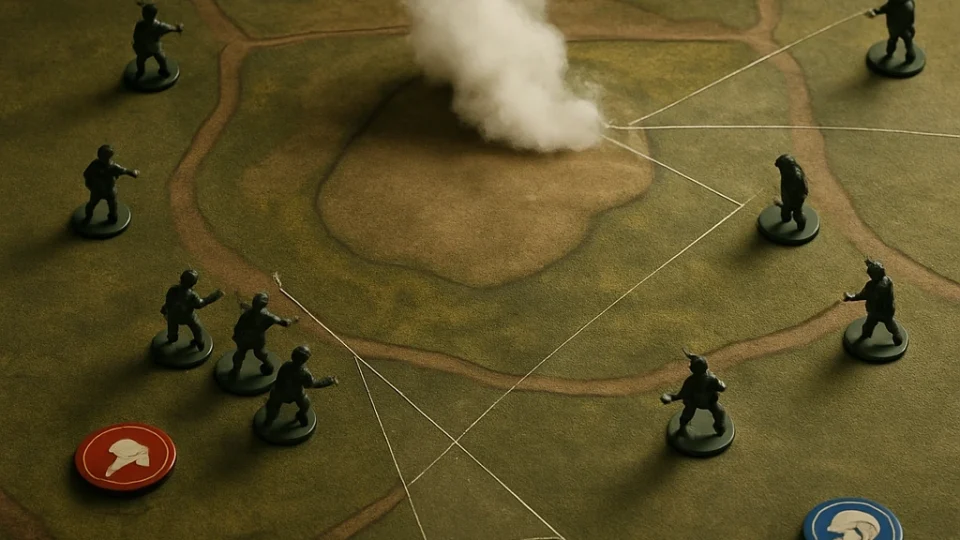
For a prospective player, this is less about memorising abstract differences and more about recognising the type of strategy that appeals. If the prospect of discussing agents, team composition and counters alongside familiar tactical-shooter fundamentals sounds engaging, VALORANT’s structure offers a distinct draw. If not, the games’ shared tactical base remains the more useful starting point for comparison.
Skill Demands and the ‘Harder Game’ Question
“Which game is harder?” is a popular question, but it is a poor shortcut to a useful decision. Professional players who have competed in both VALORANT and Counter-Strike have not reached a consensus on a universal answer. That alone is a reason to be cautious about declaring a winner based on reputation, community debate or a single player’s preferred game.
Both titles are competitive team shooters with similar gunplay, economics and map makeup. VALORANT also asks players to engage with agent abilities, team-composition options and lineup-specific counterplay. Those observations describe different demands, but they do not produce a reliable overall difficulty ranking. A broader strategic layer is not the same thing as proof that one game is harder for every newcomer or every experienced player.
One VALORANT study divided its participant groups by rank, classifying Platinum or higher as high skill and Gold or lower as low skill. In that participant population, 28.7% were Platinum or higher when the data was collected. This provides a limited snapshot of how that study organised VALORANT players; it is not a cross-game measure of difficulty, and it cannot be used to rank Counter-Strike 2 players or establish a universal learning curve.
The better approach is to separate skill from preference. Competitive shooters reward development, but the supplied material does not support telling a beginner to choose one title, or an advanced player to choose the other, solely because of an assumed difficulty gap. Choose according to the strategic features you want to learn, not a supposedly definitive hardness verdict.
Competitive Scene and Esports Audience
Both games have established themselves as major team-based shooter esports with enormous audiences. That makes the comparison meaningful beyond casual play: VALORANT and Counter-Strike have each attracted substantial competitive attention and a large viewing public.
Historical audience patterns add context, although they should not be mistaken for a live ranking of the current scenes. In the cited analysis, VALORANT esports watch time had grown consistently since the game’s release. Counter-Strike watch time showed a dip in 2023, which the analysis linked to the transition to Counter-Strike 2 and the move from MR16 to MR12 rather than to falling audience interest.
Language distribution also complicates any simplistic view of regional reach. The English-language share of total viewership declined for both titles over time. For Counter-Strike, English-language streams accounted for more than 70% of viewership in 2016 and 42% in 2024. That shift suggests that audience patterns cannot be reduced to English-language broadcasts alone.
These figures are best read as historical esports context, not as proof of current tournament strength, player pathways or complete regional popularity. They do show that neither game is a niche alternative in competitive viewing terms. If watching elite play is part of your interest, both offer a substantial esports presence; the gameplay distinction remains more useful than trying to declare a present-day audience winner from dated trends.
Which Game Fits Your Preferred Way to Play?
Start with what the games share. If you want a competitive tactical shooter where gunplay, economy and map-based teamwork are central, either VALORANT or Counter-Strike 2 may fit the broad experience you are looking for. The comparison does not support treating one as the easy option, the serious option or the only choice for players at a particular skill level.
VALORANT is the clearer fit if the appeal lies in agents with unique abilities and in the strategic questions those agents create. Its system makes team composition meaningful and gives squads another way to think about countering an opponent. Players who enjoy discussing line-ups as part of a plan may find that layer especially compelling.
Counter-Strike 2 is the useful point of comparison if your interest is concentrated on the tactical-shooter base the games have in common: gunplay, weapon design, economics and map makeup. The available material supports that overlap, but it does not support a sweeping claim that every player who prefers a simpler or more demanding experience should choose one game over the other.
In practice, the decision comes down to the role you want agent-driven strategy to play in your matches. If that extra layer sounds like a meaningful addition to tactical gunplay, VALORANT gives you a distinct reason to choose it. If it does not, compare the games on the shared competitive qualities you value most rather than relying on a universal verdict about difficulty or prestige.